Signs You Have a Slab Leak
No single symptom proves it. Two or three together usually mean it's time to get the line tested.
You can hear water running with everything turned off
Shut off every fixture in the house, then stand somewhere quiet and listen. A faint hiss or rush of water means something in the pressurized supply system is still flowing. That is one of the more reliable indicators, because a closed system should be silent.
A warm spot on the floor
If the leak is in the hot water line, the escaping water heats the slab above it. You'll feel it barefoot as a patch that's noticeably warmer than the floor around it. Pets often find it before people do. A cold-water slab leak won't produce this, so its absence doesn't rule anything out.
Your water bill jumped and nothing changed
A supply line under pressure loses water continuously. Compare the last few bills against the same months in prior years. A meaningful jump with no new irrigation, no houseguests, and no new appliance is worth investigating.
Pressure dropped throughout the house
Water escaping before it reaches your fixtures shows up as weaker flow everywhere at once. If it's only one faucet, that's a fixture problem, not a slab problem.
Damp carpet, buckling flooring, or a musty smell
Water under the slab eventually finds a path up through cracks and expansion joints. Warped wood flooring, carpet that stays damp in one area, or a persistent musty odor near the floor all point downward.
Cracks appearing in floors or walls
Sustained water under a foundation changes how the soil beneath it behaves, and the slab can move in response. New cracks in tile grout, drywall, or door frames that suddenly stick are late-stage signs. If you're seeing these, the leak has probably been running for months.
If water is actively pooling, shut off the main valve first. Then call 346-671-0767. Stopping the flow limits what the water can damage while you wait.
What Causes Slab Leaks
Abrasion. Copper lines that were laid directly against concrete or gravel rub against it every time hot water expands them and cool water contracts them. Over decades that friction wears a hole through the pipe wall. This is the single most common cause in homes with copper supply lines under the slab.
Corrosion. Copper reacts with certain soil and water chemistries, thinning from the outside in or the inside out until it perforates. The result is the classic pinhole leak.
Foundation movement. Soil that expands when wet and contracts when dry moves the slab, and the slab moves the pipes cast into it. Enough cycles and a joint separates or a line shears.
High water pressure. Municipal pressure above what residential piping is rated for accelerates every one of the above. A pressure test is cheap and tells you whether a regulator is needed.
Which of these is behind your leak is not something anyone can tell you over the phone. Abrasion and corrosion look identical from the kitchen floor; the difference only shows once the line is exposed. It matters, though, because it decides whether a spot repair is sensible or whether the rest of the system is on the same clock.
If you know when the house was built, tell us when you call — it narrows down what is likely under the slab before anyone arrives, and it changes what we bring on the truck.
How a Slab Leak Is Located
Nobody should be breaking concrete to search. Location comes first, and it's non-destructive.
Isolate the system
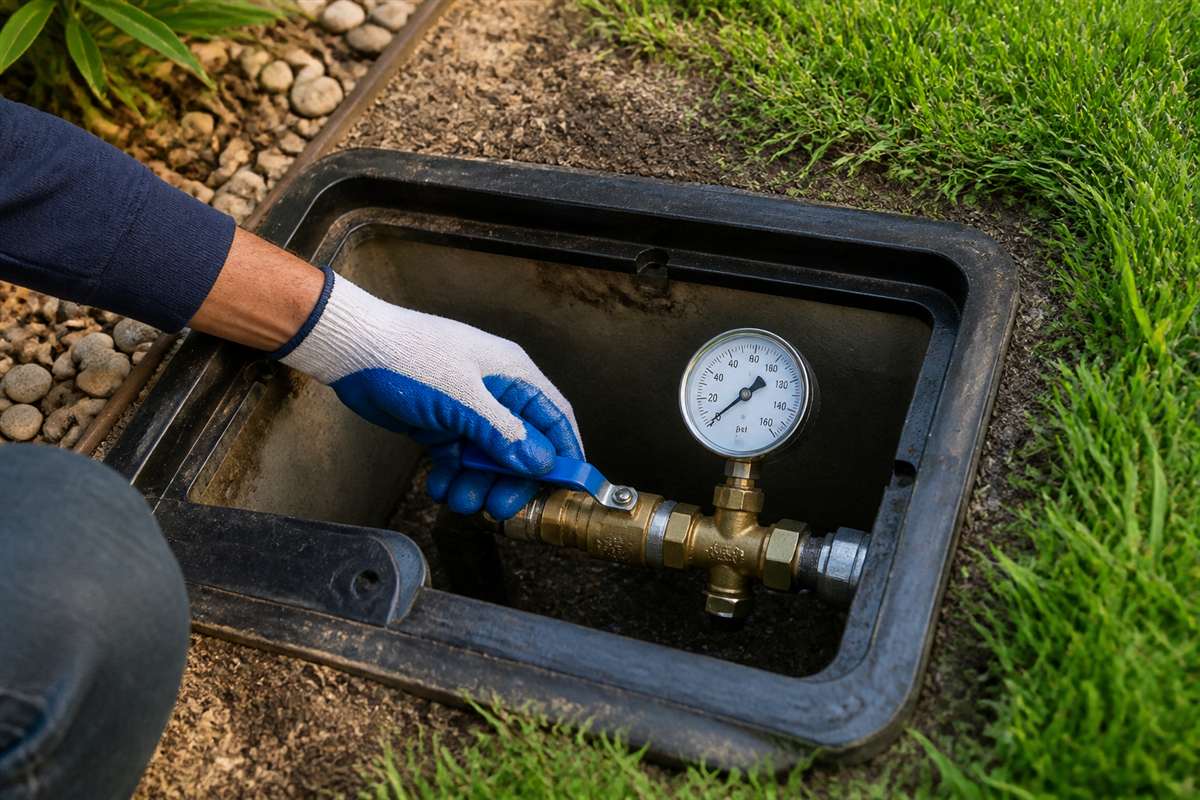
The meter test comes first: shut off everything, watch whether the meter still turns. Then the hot and cold sides get isolated separately so the leak can be narrowed to one system before anyone starts listening for it.
Acoustic listening
Ground microphones amplify the sound of water escaping a pressurized line through concrete. Moving the sensor across the floor in a grid narrows the loudest point to a small area.
Pressure and tracer gas testing
When acoustic results are ambiguous, the line is pressurized with an inert tracer gas that migrates up through the slab and is detected at the surface. This works where noise alone doesn't give a clear answer.
The output of all this is a marked spot on your floor and a decision about which repair method makes sense. Only then does anything get opened up.
Repair Options
There are three real choices, and the right one depends on the age of the plumbing, how many leaks you've already had, and where the failure sits.
Spot repair
Break through the slab at the located point, cut out the failed section, splice in new pipe, patch the concrete. It's the least expensive option and the fastest. It makes sense when the system is otherwise sound and this is the first failure. It does nothing for the rest of a line that's failing for systemic reasons — if the pipe corroded because of water chemistry, the next hole is already forming somewhere else.
Reroute
Abandon the failed run under the slab and reroute a new line through the attic and down the walls instead. Nothing gets buried in concrete, so that segment can never fail this way again and it stays accessible. It requires opening drywall and it costs more than a spot repair, but for a line that has failed once it's often the better long-term decision.
Full repipe
Replace the entire supply system above the slab. This is the answer when you've had multiple leaks, when the piping material has reached the end of its service life, or when a plumber locating one leak finds evidence of others forming. See whole-home repiping for what that involves.
Ask for the reasoning, not just the price. A spot repair on a system that needs a repipe is money spent twice. A repipe recommended after one isolated leak deserves an explanation of what else was found.
What Slab Leak Repair Costs
Cost depends on the repair method, how deep the line sits, what flooring has to come up, and whether the concrete needs structural attention afterward. A spot repair and a full repipe are not in the same range.
What moves the number most is which repair the situation actually calls for. A spot repair opens one section of slab and closes it again. A reroute abandons the failed run and puts new pipe overhead — more expensive, but that line can never fail under the foundation again. A full repipe is a different order of job entirely.
After that it is depth, and what is sitting on top of the slab. Tile and hardwood cost more to take up and put back than carpet does, and that restoration is often a bigger share of the bill than the plumbing itself.
Pricing for leak location and for the repair itself is covered when you book the appointment, so you know the cost before a plumber is on the way.
Whatever the number, get it in writing before work starts, and get it broken out by location, repair, and restoration.
What Happens If You Wait
A slab leak is one of the few plumbing problems where delay reliably makes the bill larger.
- Water runs continuously and you pay for every gallon
- Saturated soil under the foundation loses bearing capacity, and the slab can settle unevenly
- Moisture wicking up through concrete destroys flooring and baseboards
- Persistent damp behind walls creates conditions for mold
Slab Leak Questions
Can I find a slab leak myself?
You can gather evidence. Shut off every fixture and check whether the water meter still moves — if it does, something is leaking somewhere in the system. That tells you to call someone. It doesn't tell you where the leak is or whether it's under the slab, and pinpointing it requires acoustic or tracer-gas equipment.
Will you have to tear up my floor?
Locating the leak is non-destructive. A spot repair does require opening the slab at one point, which means removing flooring in that area. A reroute avoids the slab entirely but involves opening drywall instead. Which method is used gets decided after location, and you should be shown the tradeoff before anything is cut.
Does homeowners insurance cover a slab leak?
Policies commonly cover the resulting damage from a sudden failure while excluding the cost of repairing the pipe itself, and they typically exclude damage from long-term seepage. Coverage varies significantly between carriers. Read your policy or call your agent — this page is not insurance advice.
Do I need a permit for slab leak repair?
Often, yes — work that opens a foundation or reroutes supply lines is usually permitted work, but it depends on scope and on which authority has jurisdiction over your address. Your plumber will confirm what your specific repair requires and who pulls the permit before anything is opened up.
Request Slab Leak Service
Tell us what you're seeing and we'll call you back. If water is actively running, call 346-671-0767 instead — it's faster.
Prefer to talk? Call 346-671-0767.